
Butterflies’ Mysterious Ability to Evade Predators Mirrors ‘Barber Pole’ Optical Illusion
 Tommy Alien ·
Automatically curated summary from The Debrief.
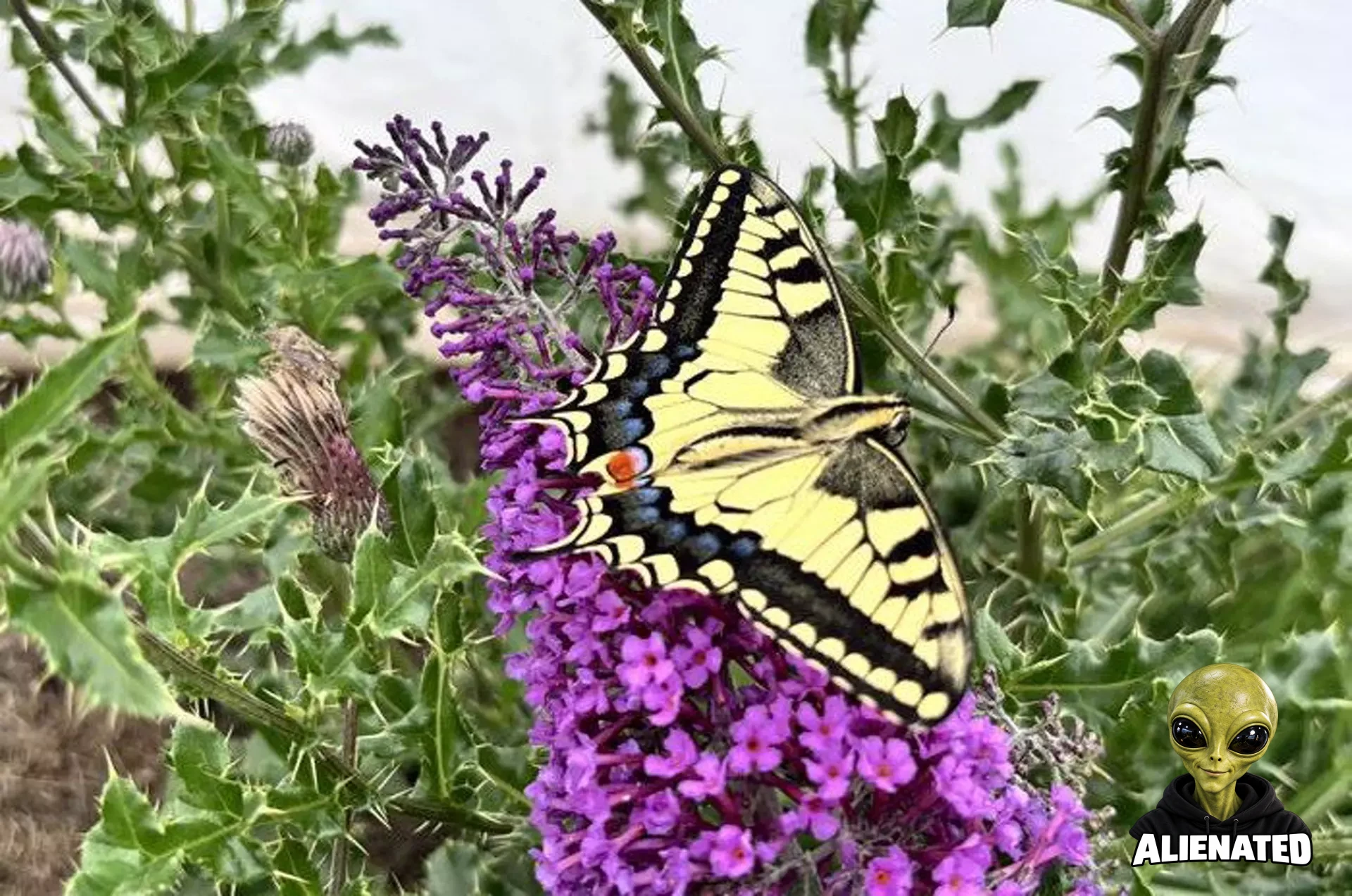
University of Exeter researchers, including Dr. Jolyon Troscianko and Dr. George Hancock, report that European butterflies use a 'barber pole' optical illusion to confuse avian predators. High-speed video combined with bird-vision computer modeling and touchscreen experiments revealed that wing deformations during flight create false motion cues, scrambling a predator's sense of direction and speed. Computer simulations evolving wing patterns converged on designs matching wild species, leading researchers to suggest motion confusion drives wing evolution. They noted similar visual mechanisms might exist in zebras, snakes, and other species, though broader ecological applications require further investigation.
Context and limitations
Findings rely on computer vision models and human subjects playing touchscreen games rather than live bird attacks in natural settings, and proposed applications to zebras or snakes remain unproven hypotheses.
Comments
Related articles

An aquanaut comes home: Returning to Earth from an undersea 'space station'
Space.com

Scientists Use Ancient Rains to Map the Possible Origin Life on Mars
Universe Today

The Chemistry in Stellar Nurseries is Complex, and a New 3D Model Highlights It
Universe Today