
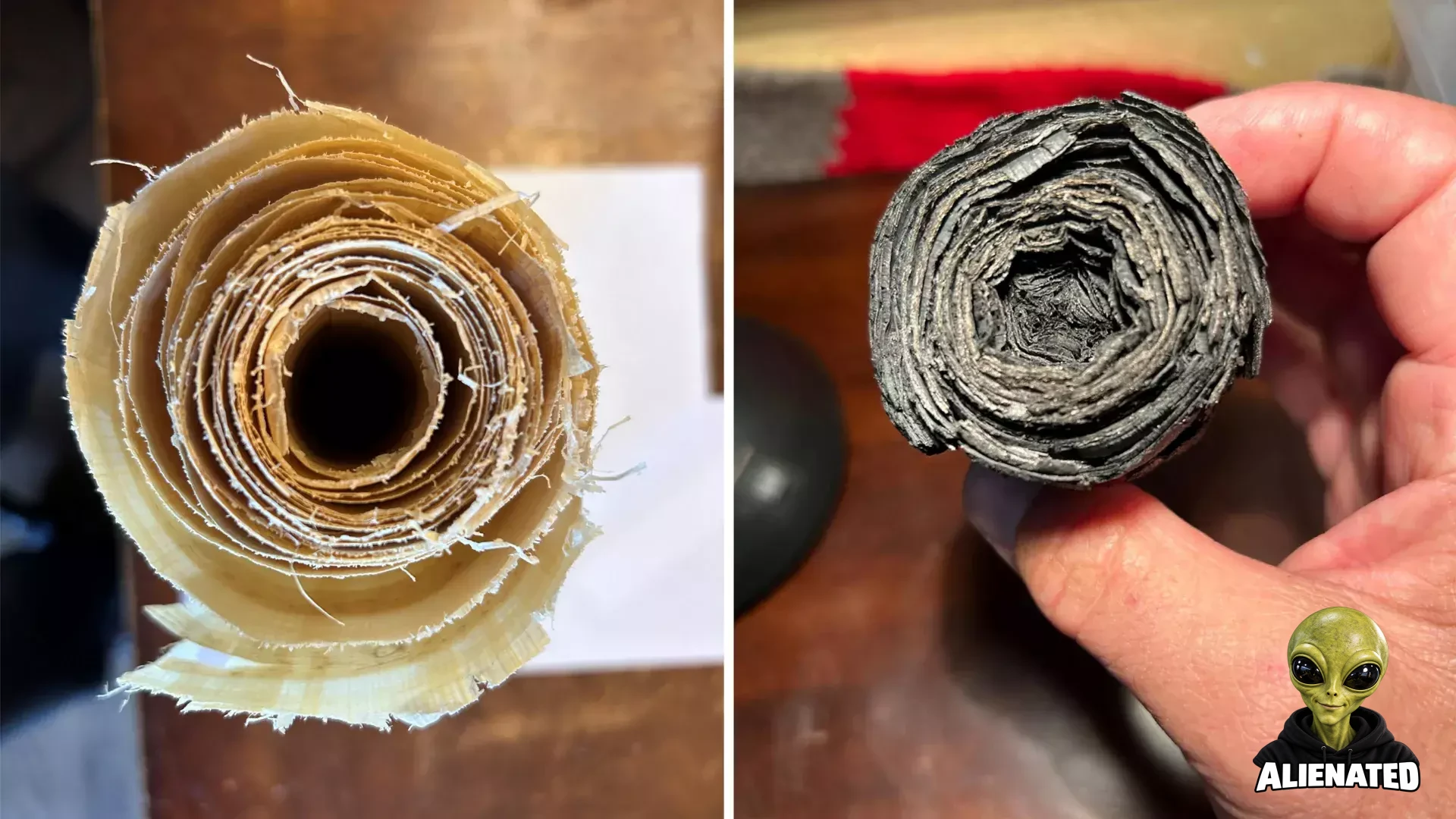
Scientists burned their own scrolls to unlock a 2,000-year-old mystery
 Tommy Alien ·
Automatically curated summary from ScienceDaily — Archaeology.
According to ScienceDaily, scientists discovered that tiny amounts of lead in ancient ink can make writing inside burned papyrus scrolls stand out dramatically during X-ray scans. This imaging technique could potentially help researchers read lost Greek and Roman texts preserved during the eruption of Mount Vesuvius nearly 2,000 years ago. The brief report suggests that scanning lead-marked inks offers a non-destructive method to decipher fragile, carbonized ancient documents, though full details on the experimental scroll burning process remain limited in the excerpt.
Context and limitations
The provided text is a brief excerpt; further scientific verification is needed regarding the methodology, success rates, and whether ancient scrolls uniformly contain enough lead for effective X-ray scanning.
Comments
Related articles
An aquanaut comes home: Returning to Earth from an undersea 'space station'
Space.com

Scientists Use Ancient Rains to Map the Possible Origin Life on Mars
Universe Today

The Chemistry in Stellar Nurseries is Complex, and a New 3D Model Highlights It
Universe Today