All news
article

Suspected Second-generation Planet Solves NASA Hubble Cold Case
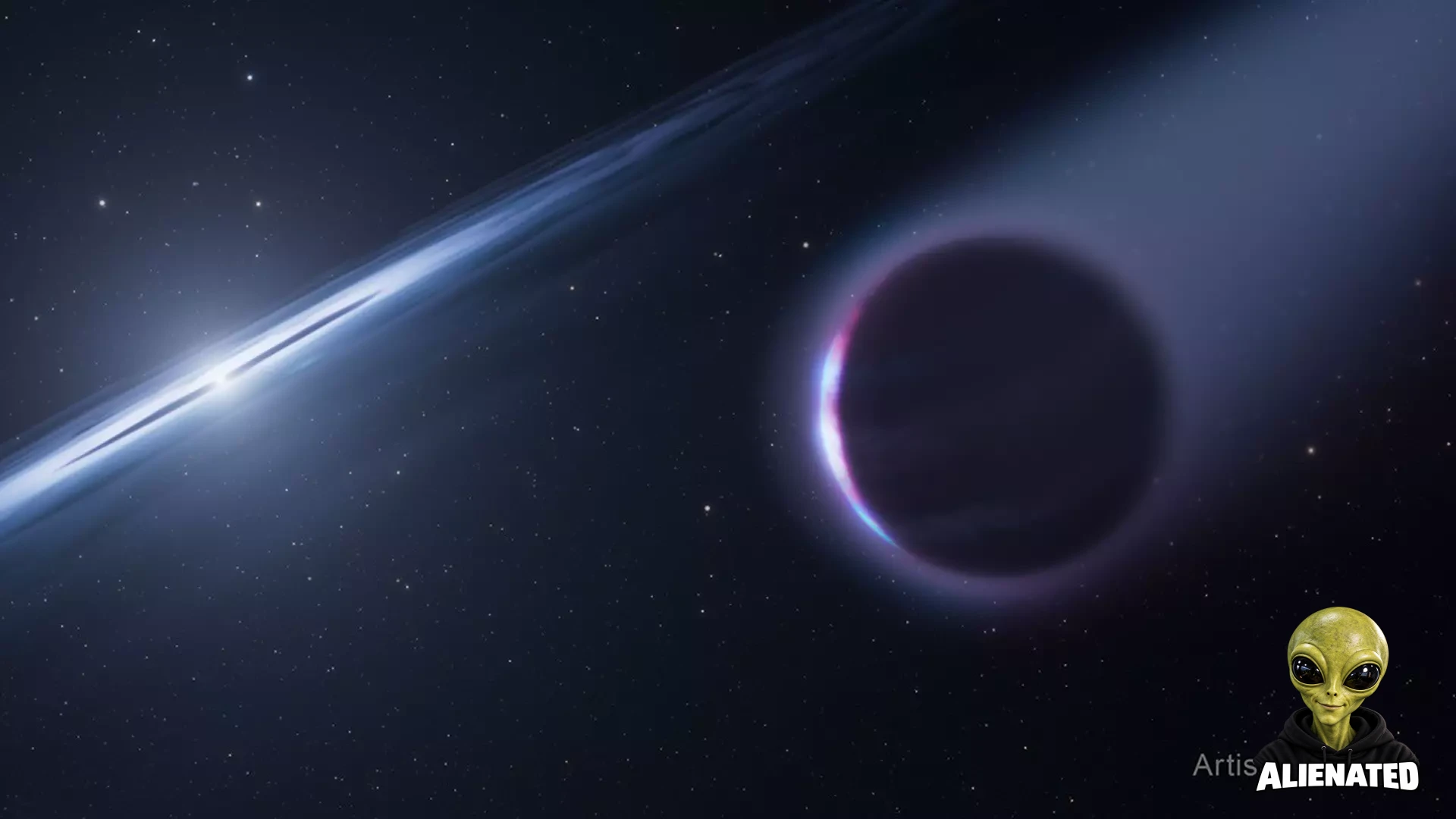

A gaseous planet in the right foreground, seen mostly in silhouette, orbits a small, white star in the background at left. The star is surrounded by a thin, bright white disk tilted from lower left to upper right. A semi-transparent tail of material comes off the planet toward upper right. Distant stars dot the black background of space.
Image via NASA; original credits at the source.

Automatically curated summary from NASA.

In a study published in Nature Astronomy, researchers reanalyzing archival 1999 NASA Hubble Space Telescope data detected high abundances of niobium in the white dwarf system HS 0209+0832. Lead author Jamie Williams of the University of Warwick suggests the heavy element originated from stellar ejecta that formed a suspected second-generation gas giant planet. Supporting observations from NASA's FUSE and TESS missions revealed a candidate Jupiter-sized planet orbiting close to the star. The candidate world appears to be losing its outer atmosphere, which may create a disk feeding material back onto the white dwarf.

Context and limitations

The existence of a second-generation planet is a theoretical model proposing an explanation for the observed niobium, and the object remains a candidate requiring further observational confirmation.
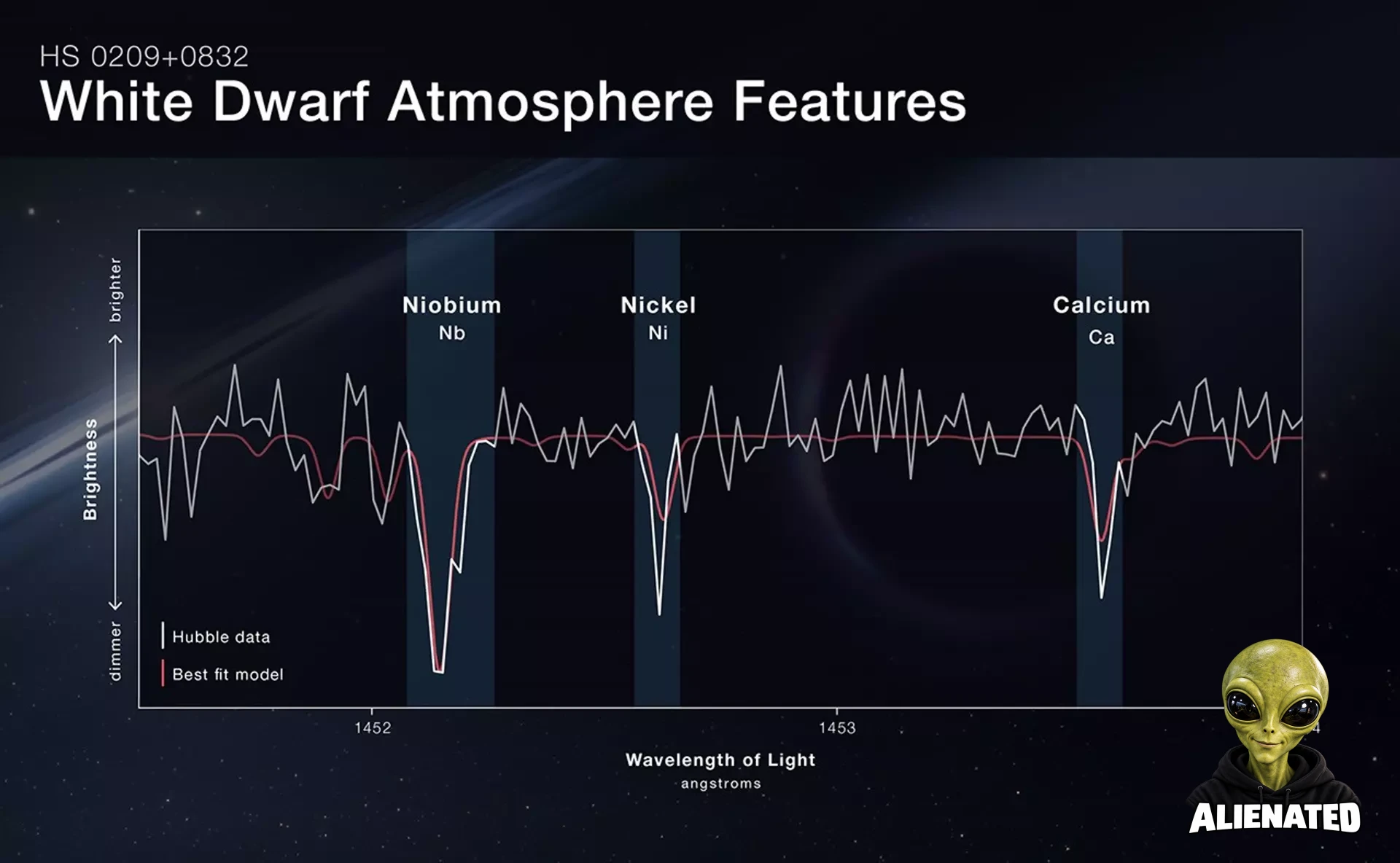
Line graph titled HS 0209+0832, White Dwarf Atmosphere Features. Hubble Space Telescope spectral data is shown in white, compared with a best fit model in red. The vertical y axis is labeled Brightness, with brighter at the top and dimmer at the bottom. The horizontal x axis is labeled Wavelength of light, angstroms. One-third of the way across the x axis is labeled 1452. To the right of the graph’s center is angstrom label 1453, and the right edge of the graph is labeled angstrom 1454. Three dr
Image via NASA; original credits at the source.
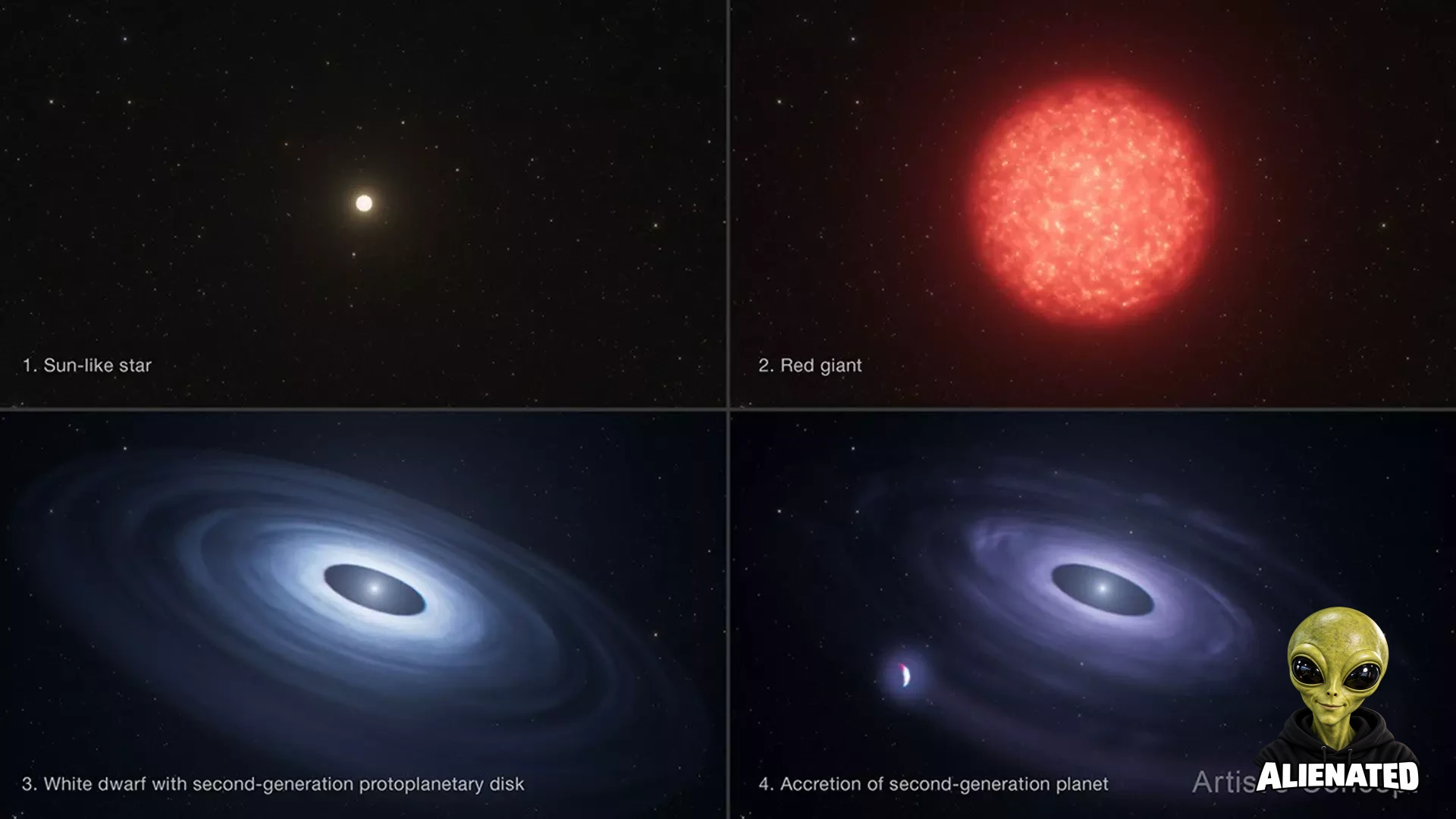
Illustration divided into quadrants, showing the evolution of a star system over time. The upper left is labeled 1. Sun-like star. It shows a small, glowing yellow star centered with other faint stars in the background of space. The upper right quadrant is labeled 2. Red giant. It shows a much larger, puffy orange-red star with a yellow glow within. The bottom left quadrant is labeled 3. White dwarf with second-generation protoplanetary disk, showing a bright white star, smaller than the origina
Image via NASA; original credits at the source.
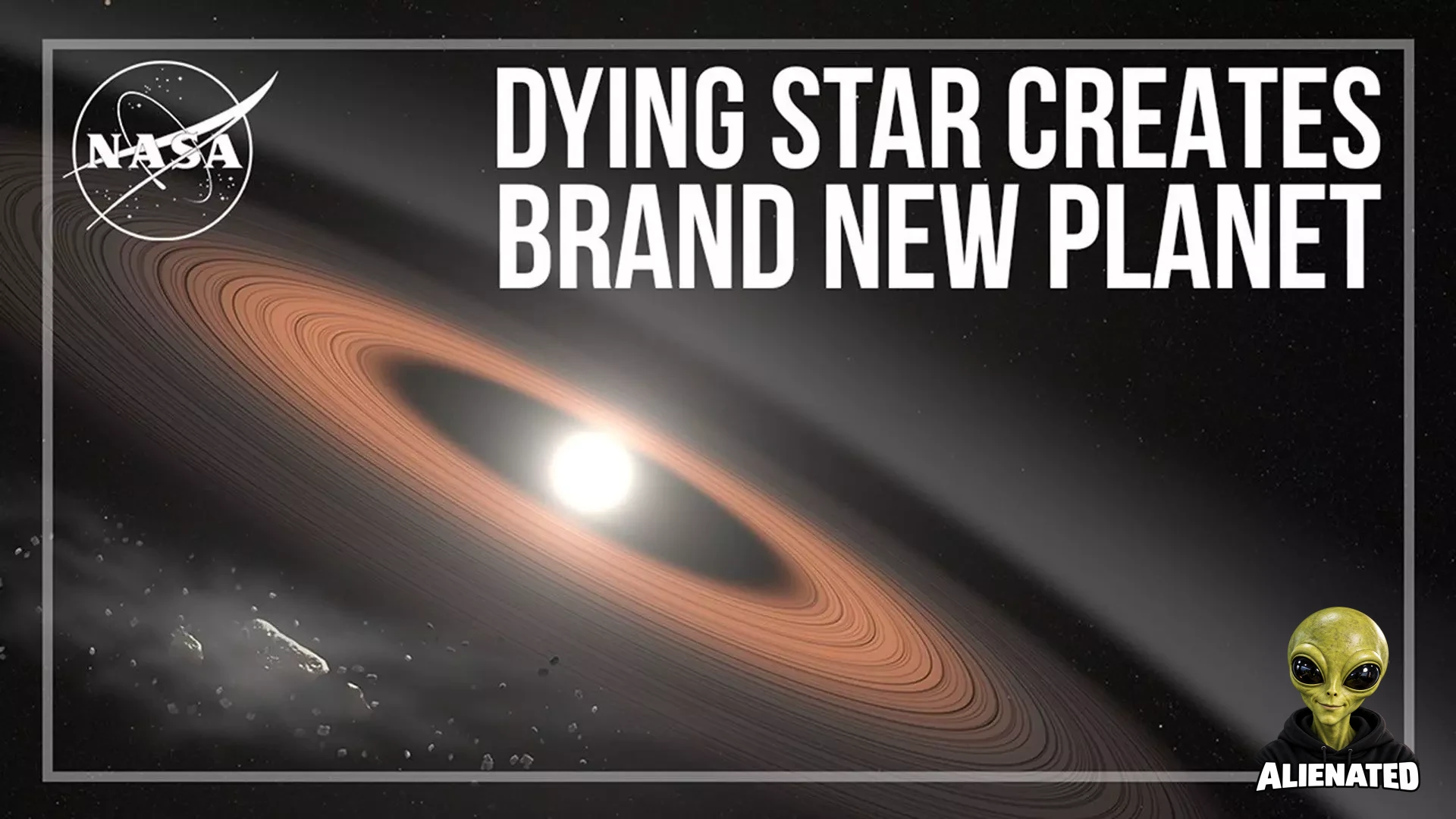
An artist's concept image of a white dwarf star with an orange disk of material around it. The NASA "meatball" logo in black and white is in the upper-left corner. The title, "Dying Star Creates Brand New Planet" is across the top-center to the upper-right corner.
Image via NASA; original credits at the source.

Comments