
James Webb Telescope Uncovers New Evidence of Cosmic Collisions—and One of Them May Have Created Our Moon
 Tommy Alien ·
Automatically curated summary from The Debrief.
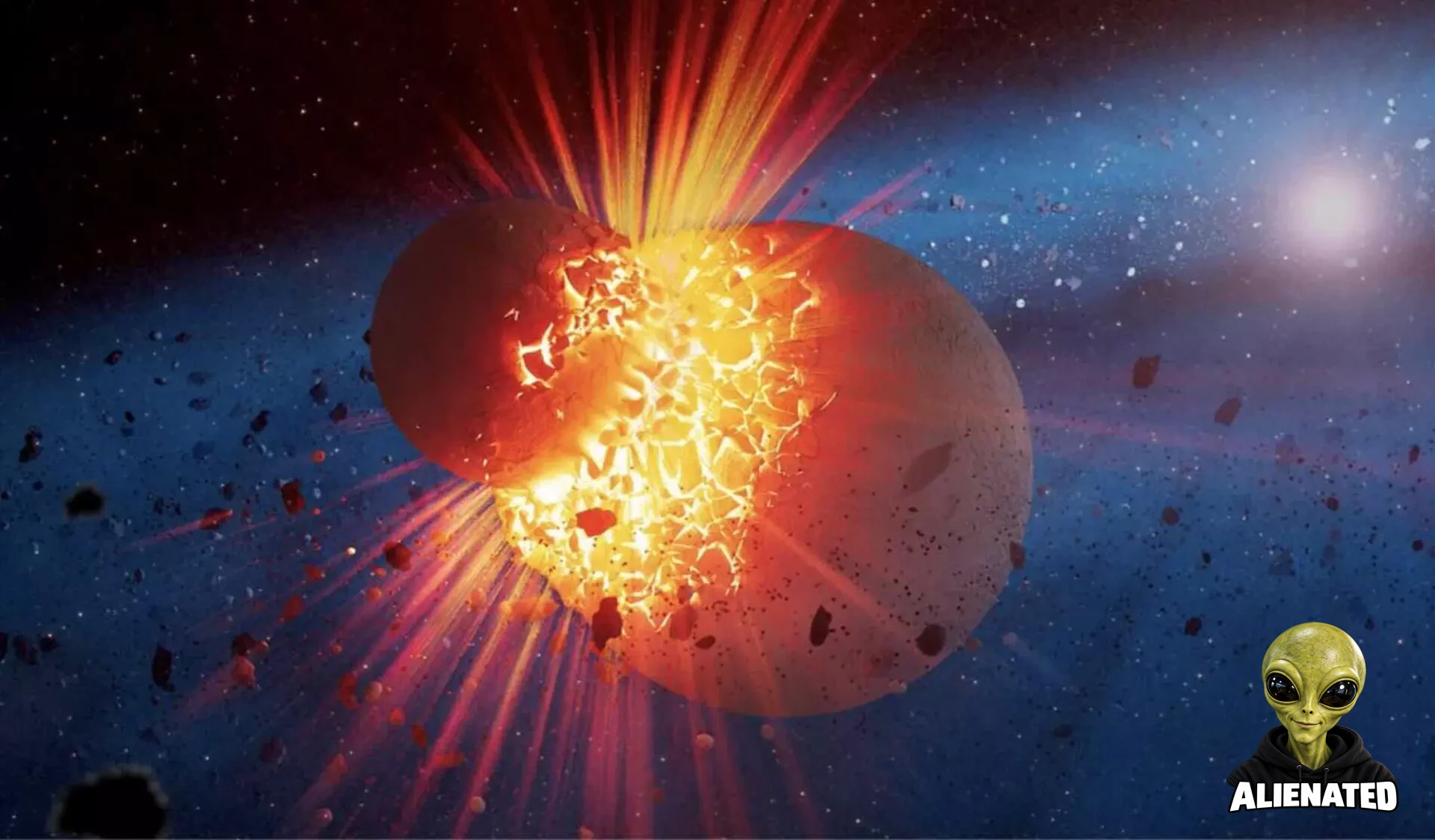
According to a report by The Debrief, astronomers led by Kate Su used NASA's James Webb Space Telescope and Spitzer Space Telescope to analyze over 20 extreme debris disks around distant stars. The team identified two mineral categories in the dusty environments: silica-rich disks, indicating massive energetic collisions between Mars-sized bodies, and silica-poor disks, suggesting less energetic impacts. Su and coauthor Agnes Kospal noted that the silica-rich disks, found around stars younger than 300 million years, offer potential insights into early planetary evolution and hypotheses like the ancient impact that may have formed Earth's Moon.
Context and limitations
The findings rely on distant debris disks as indirect proxies for early planetary formation, and the Theia collision scenario remains a hypothesis supported by models rather than direct historical evidence.
Comments
Related articles
An aquanaut comes home: Returning to Earth from an undersea 'space station'
Space.com
Queen's University Belfast Students Find Neptune's Elusive Trojan Asteroids
Universe Today
What Could Split a Black Hole in Two?
Universe Today